
Goat Cheese and Caramelized Onion Ravioli
Sharp goat cheese, sweet slow-cooked onions, a simple butter sauce. How to make filled pasta from scratch and why the onions take 40 minutes.
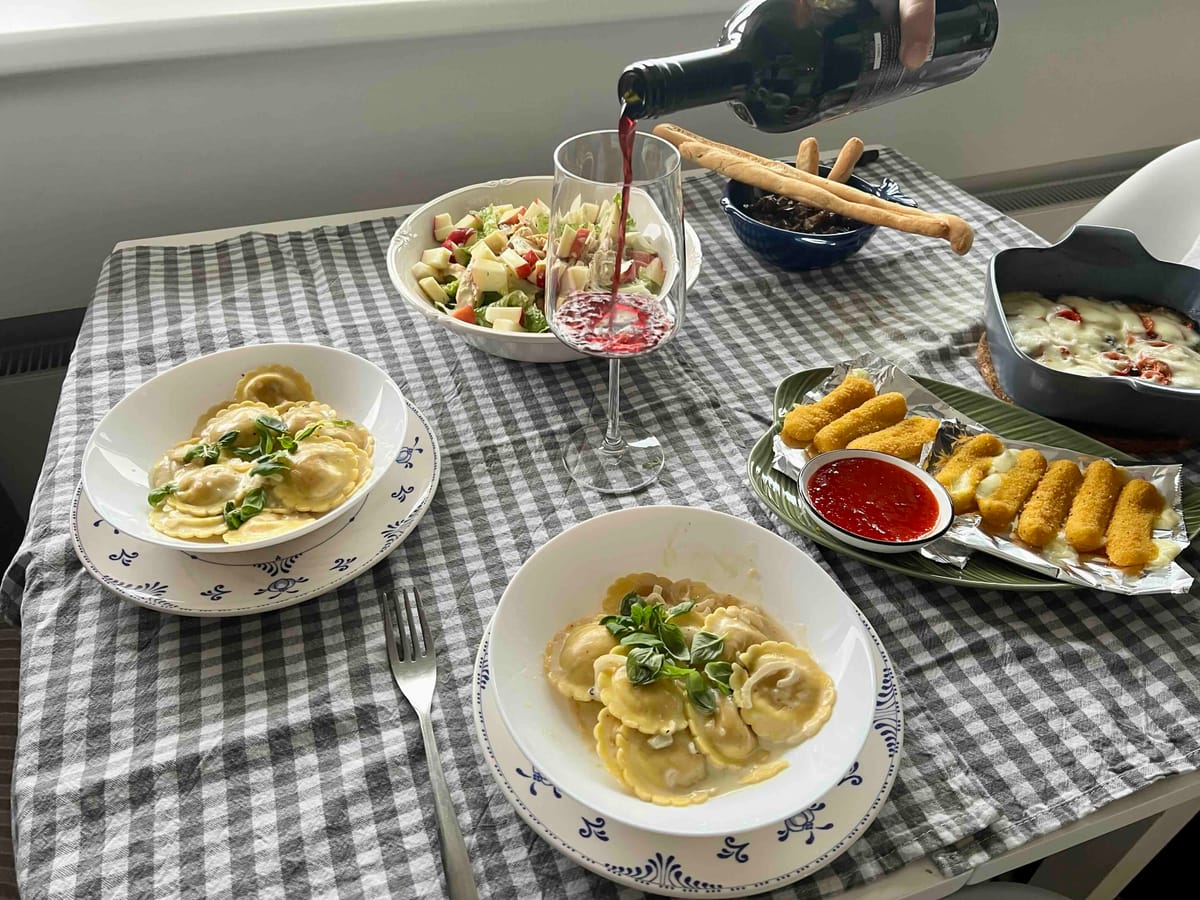
Goat cheese and caramelized onion is one of those combinations that feels more considered than it is. The sharpness of the goat cheese against the sweetness of slow-cooked onion works every time, and it works because you're doing the onions properly, which means low heat and patience.
This is a filled pasta recipe. If you've never made fresh pasta, the dough here is forgiving and the filling is straightforward. If you'd rather use store-bought fresh pasta sheets, that works too.
Ingredients (serves 2)
For the dough: - 200g 00 flour (or plain flour) - 2 large eggs - 1 tablespoon olive oil - Pinch of salt
For the filling: - 2 large onions, thinly sliced - 150g soft goat cheese (chèvre) - 1 tablespoon butter - 1 teaspoon fresh thyme leaves (or half a teaspoon dried) - Salt and pepper
To serve: - 30g butter - A few fresh thyme sprigs or sage leaves - Grated Parmesan (optional)
How to make it
The onions first. Melt the butter in a wide pan over low heat. Add the onions and a pinch of salt, stir to coat, then leave them mostly alone. Stir every 5 minutes or so. You want them to slowly collapse and turn a deep golden brown. This takes 35 to 40 minutes and cannot be rushed. High heat browns the outside and leaves the inside sharp. Low and slow is what makes them sweet.
When the onions are properly caramelized, take them off the heat and let them cool for 10 minutes. Then mix them into the goat cheese with the thyme, a pinch of salt, and a good amount of pepper. Taste it. The filling should be rich, slightly sweet, and have a clear tang from the cheese.
The dough. Pile the flour on a clean surface and make a well in the centre. Crack in the eggs, add the olive oil and salt. Beat the eggs with a fork, gradually incorporating the flour from the edges inward. When it comes together into a rough dough, start kneading with your hands. Work it for 8 to 10 minutes until smooth and elastic. It should feel like soft leather, not sticky. Wrap in cling film and rest for 30 minutes at room temperature.
Rolling. Cut the dough into two pieces. Work with one at a time, keeping the other wrapped. Roll as thin as you can on a lightly floured surface, aiming for roughly 2mm, thin enough to almost see your hand through it. A pasta machine makes this easier but isn't required.
Filling and cutting. Lay one sheet flat. Place teaspoon-sized mounds of filling in rows, spaced about 5cm apart. Brush water lightly around each mound. Lay the second sheet on top and press firmly around each mound to seal, pushing out any air. Cut into squares with a knife or pastry cutter. Press the edges again to make sure they're sealed.
Cooking. Bring a large pot of well-salted water to a boil. Cook the ravioli for 3 to 4 minutes. Fresh pasta cooks fast. Taste one to check. They're done when the pasta is tender and the filling is hot through.
The butter sauce. While the ravioli cooks, melt the butter in a wide pan over medium heat. Add the thyme or sage and let it sizzle for a minute until fragrant. The butter should be lightly golden but not brown.
Use a slotted spoon to transfer the ravioli directly into the butter pan. Toss gently to coat. Serve immediately with Parmesan if you want it.
A few notes
On the onions: The most common mistake is turning up the heat to speed things up. You'll get bitter, slightly charred onions instead of sweet ones. If the pan looks dry, add a splash of water, not more butter.
On the goat cheese: Buy the soft, fresh kind (usually labelled chèvre). The firm aged variety won't mix properly and tastes more pungent than you want here. Room temperature goat cheese blends more easily, so take it out of the fridge while the onions cook.
On sealing: Any air pocket in the ravioli will expand during cooking and burst the seal. Take an extra 30 seconds to press firmly around each one. If they do open in the pot, the filling stays mostly intact — not a disaster, but not ideal.
On store-bought pasta sheets: If you're skipping homemade dough, fresh lasagne sheets from the supermarket work well. They're thin enough and the texture is close. Dried pasta sheets don't work here.