
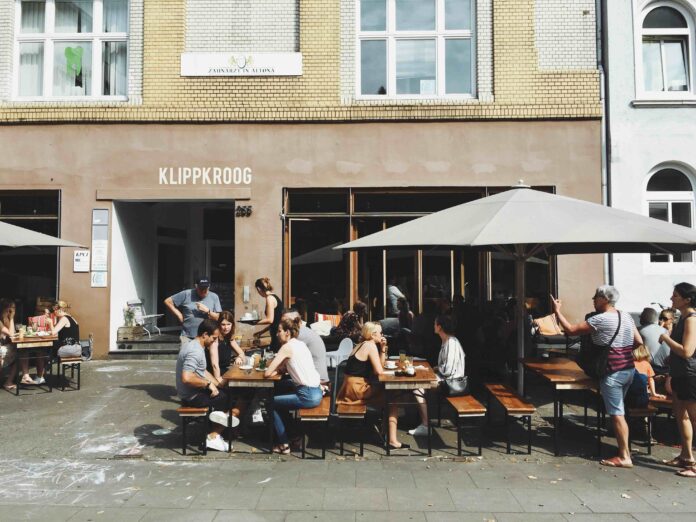
It was a Tuesday in November, maybe 6:45 in the morning, and I was standing at the Fischmarkt in Altona with a paper plate of Backfisch and a coffee that was somehow already cold. The wind off the Elbe was doing its thing — that wet, horizontal slap that only Hamburg manages. A guy next to me was eating a entire Matjes herring with his bare hands like it was a banana. I thought: yeah, this is street food here. No trendy packaging. No “artisan” anything. Just good food, eaten fast, ideally under some kind of awning.
I’ve lived in Hamburg for a while now, and I still find myself circling back to the same stalls, the same markets, the same slightly-too-greasy Bratwurst stands after a few beers in St. Pauli. This isn’t a “Top 10 Instagrammable Bites” kind of guide. It’s what I actually eat when I’m hungry, it’s cold, and I don’t want to sit down in a restaurant.
If you’re visiting Hamburg or you just moved here and you want to know where to eat standing up — this is it.
I’ve been eating my way through this city for years
I should say upfront: I’m not a food critic. I’m just a person with a small kitchen and a big appetite who’d rather spend €7 on a perfect Fischbrötchen than €18 on a mediocre sit-down lunch. Hamburg’s street food scene isn’t as flashy as, say, Bangkok or Istanbul. But it’s honest. The fish is fresh, the bread is real, and nobody’s trying to put foam on anything.
Most of what I’ll talk about here, I’ve eaten more than once. Some of it dozens of times. A few spots I’ll mention because they’re worth the trip even if they only come around once a week.
The Fischmarkt: early morning chaos (in a good way)
Let’s start with the obvious one. The Hamburger Fischmarkt runs every Sunday from 5:00 a.m. to 9:30 a.m. down in Altona at Große Elbstraße. Yes, 5 a.m. Yes, on a Sunday. Half the people there are still out from Saturday night. The other half are pensioners who’ve been awake since 4:00 a.m. It’s beautiful.
The main draw for street food is the Fischbrötchen stands along the water side. My go-to is the classic Bismarck herring roll — pickled herring, raw onion, a bit of remoulade, on a plain white Brötchen. It’ll set you back around €7 these days, which — yeah, not cheap anymore. A couple of years ago this was a €4 thing. Welcome to 2026, I guess. The Backfisch (battered fried fish) rolls are solid too, though they can get soggy if you wait too long.
One thing: if you’re driving, get there early. Like, 7 a.m. early. By 7:30 there’s no parking anywhere on the surrounding streets. Not “difficult to find” — literally zero. There’s a Parkhaus nearby which is your best bet if you arrive later, but honestly, plan ahead or take the S-Bahn to Reeperbahn and walk down. Much less stress.
Skip the guys yelling about €5 crates of bananas unless you actually need twelve bananas. You probably don’t.
The Fischauktionshalle (the big hall at the end) has live music and a breakfast buffet vibe — it’s fun once, but honestly, it’s more about the atmosphere than the food. The real eating happens outside at the stalls.
Isemarkt: the long one under the U-Bahn tracks
Isemarkt is a different energy entirely. It runs every Tuesday and Friday morning, roughly 8:30 a.m. to 2:00 p.m., along Isestraße under the elevated U3 tracks between Hoheluftbrücke and Eppendorfer Baum. It stretches for about 500 metres and the overhead tracks keep the rain off, which — if you know Hamburg — is basically a structural requirement.
This is more of a proper market than a street food destination, but there are a few stalls worth eating at on the spot:
– The Turkish gözleme stand roughly in the middle section. Freshly made, stuffed with spinach and feta, around €4.50. I get one almost every Friday.
– Crêpes stand near the Eppendorfer Baum end. Simple, not too sweet, and the guy running it actually gets the batter thin. Nutella-banana is €4, savoury ones with ham and cheese around €5.
– The Krakauer stand somewhere in the middle stretch. They do a Krakauer sausage stuffed with cheese and jalapeños that has no business being as good as it is. Messy, spicy, perfect market food. One of those things you don’t plan to eat and then suddenly you’re holding one.
– Käsespätzle from the Swabian stand. This isn’t always there, but when it is — proper comfort food. About €6 for a portion that’ll carry you to dinner.
The fruit and vegetable stalls are gorgeous, I’ll give them that — but be warned, they’re expensive. I used to live in the neighbourhood and even then I couldn’t justify doing my weekly shop there. It’s Eppendorf prices for Eppendorf people. Cherry tomatoes for €5 kind of vibes. Nice for a treat, not for your Tuesday dinner budget.
Schanzenviertel: the neighbourhood that never stops snacking
The Schanze is Hamburg’s go-to area for cheap, casual eating. It’s a bit hipster, sure, but the food is genuinely good and the prices haven’t gone completely crazy yet (give it time).
Döneria on Schulterblatt — I don’t remember the exact name, and honestly the sign changes every couple of years, but there’s a Döner place on Schulterblatt that does a properly stuffed Dürüm for about €7. Crispy bread, good amount of meat, and the garlic sauce is legit. It’s my late-night default after any evening in the Schanze.
Café Knuth isn’t technically street food, but they do a Franzbrötchen that I’d argue counts. Cinnamon, butter, slightly crushed — the way it should be. €2.20 or so. Get one and walk.
There are also a couple of falafel spots near Piazza — the quality varies, to be honest. Some days it’s excellent, some days it’s yesterday’s batch reheated. I’d say just look at how busy they are. The busy one is usually the better one. Groundbreaking advice, I know.
If you’re around on a Saturday, the weekly market at the corner of Bartelsstraße has a good paella stand. The portions are big, around €8, and you can eat it on the kerb like a civilised person.
Landungsbrücken and the tourist trap problem
I have to talk about this. The whole waterfront along Landungsbrücken — where the big ships are, where the tourists cluster — is full of Fischbrötchen stands. And most of them are… fine. Just fine. Not bad, not great. You’ll pay €5–6 for something you could get better and cheaper at the Fischmarkt or even at a Nordsee (the fast food chain, which I’m not too proud to eat at).
The one place I’d actually recommend down here is Underdocks — it’s a takeout spot, not a sit-down restaurant, and it’s genuinely good. The food is a clear step up from the generic Fischbrötchen stands lining the waterfront, and the prices are reasonable for what you get. If someone’s dragging you to Landungsbrücken anyway (and someone always is), go there.
Everything else along that strip? You can skip it. I’ve tried most of them over the years, and the premium you’re paying is for the view, not the food.
Practical tips for eating on the street in Hamburg
Bring cash. A lot of market stalls and smaller food stands still don’t take card. This isn’t Berlin — Hamburg moves slowly on the cashless thing. I’ve been caught without cash at Isemarkt more than once. There’s a Sparkasse ATM near Hoheluftbrücke if you’re desperate.
Sundays are for the Fischmarkt, Tuesdays and Fridays for Isemarkt. Don’t mix these up. I’ve shown up at the Isemarkt on a Wednesday before. It’s just an empty street. Embarrassing.
Dress for the weather, always. Hamburg street food is an outdoor activity. There is no “nice day for the market” guarantee between October and April. Bring a jacket. Bring a second jacket.
Best bang for your buck: A gözleme at Isemarkt (€4.50), a Krakauer with cheese and jalapeños (€5 or so), and a Dürüm in the Schanze (€7). That’s a solid day of eating without sitting down once.
For visitors from outside Germany: if you see Franzbrötchen anywhere, just buy one. Don’t think about it. It’s Hamburg’s best invention after the shipping container, and it costs about two euros. You’ll thank me.
Skip: overpriced bowls at any stand that uses the word “superfood.” Also, most things marketed as “street food” at organised street food events in Hamburg tend to be festival-priced and underwhelming. The real street food here is at the markets and the kebab shops.
The honest wrap-up
Hamburg’s street food isn’t going to blow your mind the way a night market in Taipei will. Let’s be real. But it’s solid, it’s affordable, and it’s deeply connected to the city — the fish, the markets, the weather-proof eating culture. I love it, even on the mornings when I’m freezing at the Fischmarkt wondering why I didn’t just make eggs at home.
If I had to pick one thing to do on your first visit: Sunday Fischmarkt, early — like 7 a.m. early — for a Bismarck herring Brötchen and a coffee. Stand by the water. Watch the container ships go by. It’s not fancy. That’s the whole point.
And then go get a Franzbrötchen on the way home. Obviously.

