
Baba ganoush – a delicious eggplant dip
A smoky roasted eggplant dip that's nothing like hummus. The eggplant does most of the work, but tasting and adjusting at the end is what makes it.
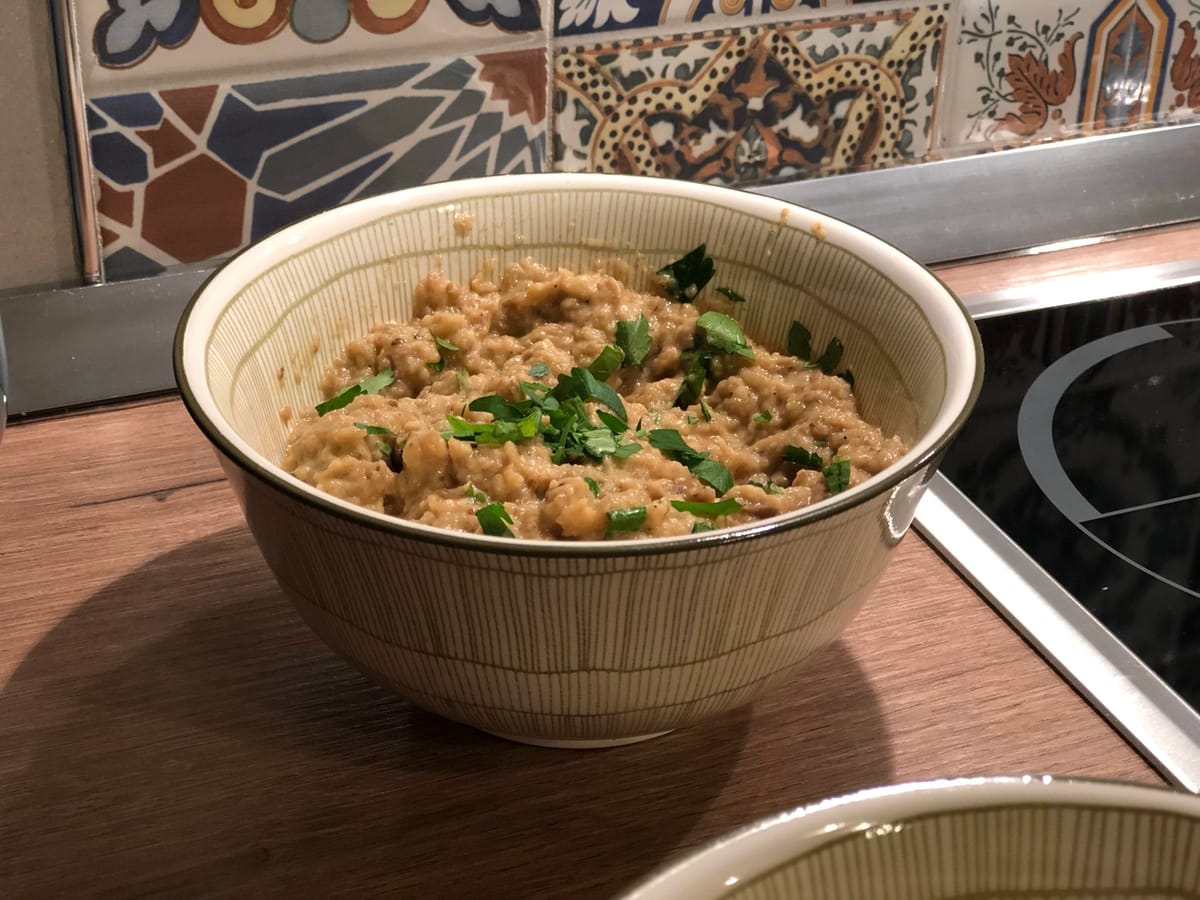
Baba ganoush is not hummus. I feel like that needs saying upfront, because they often end up on the same mezze plate and people treat them as basically the same thing. They're not. Hummus is chickpeas, tahini, lemon. It's mild, consistent, reliable. Baba ganoush is roasted eggplant, and the whole point of it is the smoke. That slightly bitter, charred, complex flavour that you either love immediately or need one more bite to get hooked on.
The smoke is the thing. You can fake it with smoked paprika, and I do use some here, but the base of the dish is an eggplant that's been cooked at high heat until the skin is blackened and the flesh inside has completely collapsed. That cooking process transforms it. What comes out is soft, smoky, and a little funky in the best possible way. Nothing else tastes quite like it.
There's also an honest variable here that most recipes skip: eggplants are inconsistent. Some are bitter, some are watery, some are full of seeds. The tahini amount in particular needs adjusting depending on how your eggplant turns out. Start with the amounts below and taste as you go. This is one of those recipes where the final adjusting step matters more than usual.
Ingredients (serves 4 as a dip)
- 1 large eggplant (about 400g)
- 2 tablespoons tahini
- Juice of half a lemon
- 1 garlic clove, minced
- 2 tablespoons olive oil, plus more to serve
- 1 teaspoon smoked paprika
- Salt and pepper
How to make it
Start with the eggplant. Cut it in half lengthways and salt the cut faces generously. Let it sit cut-face-down on a plate or board for about 10 minutes. This draws out some of the water and bitterness. Pat the faces dry with a paper towel before cooking.
Preheat your oven to 250°C (230°C fan). Place the eggplant halves cut-face-down on a baking tray. Roast for 15 to 20 minutes. You want the flesh completely soft and the skin starting to blister. If your oven runs hot, check at 15 minutes. The eggplant should feel very soft when you press it, almost like it's going to collapse.
Take it out and let it cool for a few minutes until you can handle it. Then scoop the flesh out of the skin with a spoon. Discard the skin. The flesh should be pale, soft, and slightly wet. If it looks very watery, let it drain in a sieve for a minute.
Put the flesh in a bowl and mash it roughly with a fork. You can also use a food processor for a smoother result, but I usually keep it a bit chunky. Add the tahini, lemon juice, minced garlic, smoked paprika, a good pinch of salt, and some pepper. Mix everything together.
Taste it now. This is important. If it tastes too bitter, add more lemon juice. If it tastes a bit flat, it probably needs more salt. If the tahini flavour is too strong, add a splash more lemon. If it needs more depth, add a bit more smoked paprika. Get it where you want it before serving.
Transfer to a plate or bowl, drizzle with olive oil, and serve with flatbread, pita, or whatever you have around.
On eggplant and adjusting
Eggplants vary more than most vegetables. A watery one will produce a thinner dip. A bitter one will need more lemon to balance it out. One with lots of seeds can be a bit more pungent than expected. None of this is a problem as long as you taste and adjust at the end rather than just following the amounts and hoping for the best. Start with 2 tablespoons of tahini, then add more if the dip tastes too sharp or thin. Start with half a lemon's worth of juice, then go from there. The recipe is really just a starting point.