
Salmon pasta recipe cooking basics
Build the sauce around the salmon, not the other way around. The basic salmon pasta with wine, garlic and a splash of milk that works every time.
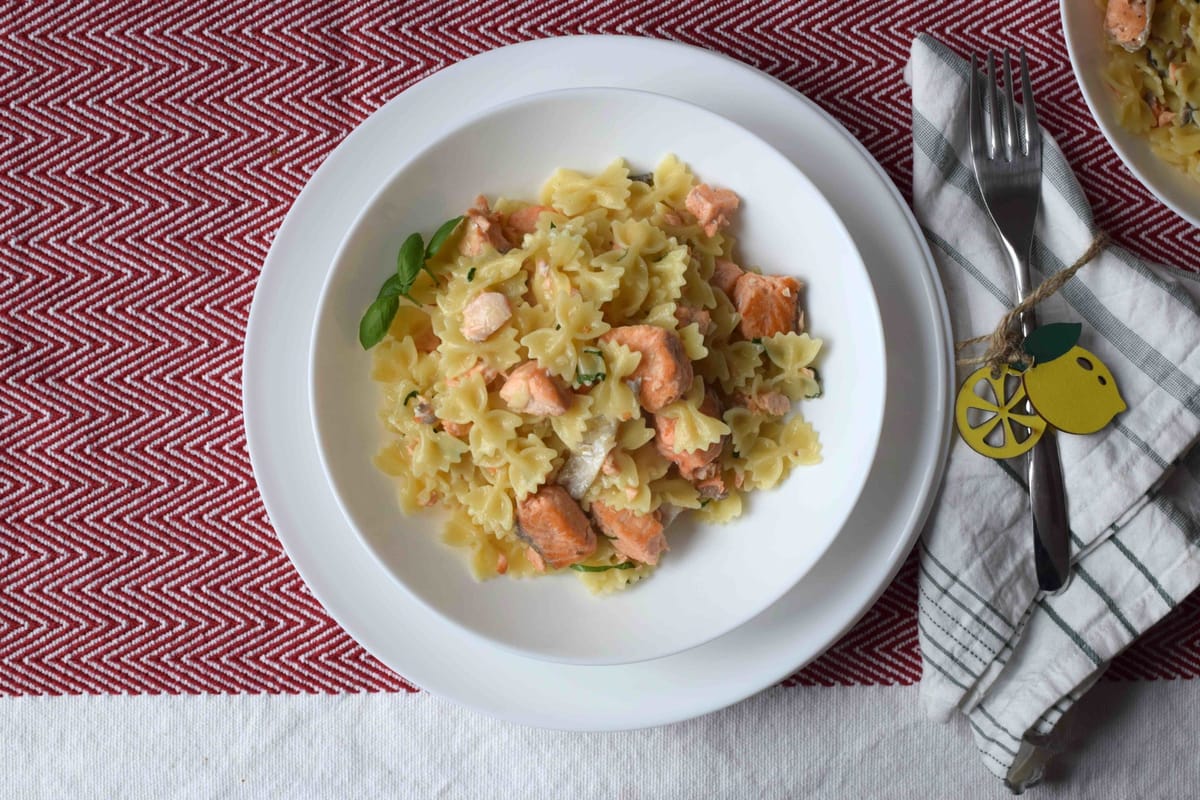
Salmon pasta is one of those things that sounds impressive and tastes impressive but is actually pretty easy once you understand what the salmon is doing in the dish. Most recipes treat it like a topping. That's the wrong approach.
Salmon has a dominant flavour. It's not chicken, which plays along with whatever you put it in. Salmon takes over. So the smart move is to build the sauce around it -- let it be the main event, use the wine and the garlic as supporting players, and let the pasta water pull it all together at the end. Once you have that logic in your head, you can riff on this base however you like.
This is the stripped-down version. Pasta, salmon, garlic, wine, a splash of milk. That's it.
Ingredients (serves 2)
- 200g short pasta (farfalle, penne, whatever you have)
- 1 salmon fillet (about 200g), skin removed, cut into strips lengthwise
- 150ml dry white wine
- 100ml whole milk
- 2 garlic cloves, finely chopped
- Olive oil, salt, and pepper
On the milk: you can swap it for a splash of heavy cream if you want something richer, or just pasta water if you want to keep it lean. Milk is my default because it's always in the fridge and it doesn't make the sauce heavy.
How to make it
Dry the salmon strips with a paper towel and season with salt and pepper.
Heat a generous glug of olive oil in a wide pan over high heat. Add the salmon. It will probably stick at first -- that's fine. Leave it alone. Once the bottom side gets a proper golden crust (the Maillard reaction, as they say), it will release on its own. Flip and do the same on the other side. You don't need to cook it through at this stage. Once it's coloured on both sides, take it out and set it aside.
Start your pasta water now. Salted, big pot.
Lower the heat to medium in the same pan. Add the garlic and let it cook for about a minute, moving it around so it doesn't burn. Then pour in the wine. Scrape up anything stuck to the bottom of the pan -- that's all flavour. Bring to a boil, then return the salmon and any juices it released while resting.
Let the wine reduce by about half, around 2-3 minutes. The sharp alcohol smell will mellow out when it's ready. Add the milk, stir gently, and keep the heat low.
A minute before the pasta is done, scoop out about half a cup of pasta water before you drain. Add it to the pan. Taste and adjust salt and pepper -- you'll probably need more than you expect at this point.
Drain the pasta, throw it into the pan, toss everything together, and turn off the heat. Let it sit for a minute. The starchy pasta water thickens the sauce as it cools slightly and the pasta absorbs some of the liquid. Don't rush this part.
On the salmon, the wine, and what else works here
On the salmon: If the fillet has skin, remove it before cutting. You can do it raw with a sharp knife -- slide the blade between the skin and the flesh at one end and pull. Or ask at the fish counter.
On the wine: Use something you'd actually drink. Nothing expensive, but nothing undrinkable either. A cheap Riesling or a Pinot Grigio is fine. Avoid anything labelled "cooking wine."
On variations: Once you have the base, a lot works well here. Capers, cherry tomatoes added with the garlic, a handful of frozen peas stirred in at the end, a squeeze of lemon over the top. Dill if you like it. I usually don't bother with any of these on a weeknight -- the plain version is already good.
On leftovers: Like most pasta dishes, this doesn't reheat brilliantly. The sauce thickens in the fridge. Add a splash of water and reheat gently. It's fine but not as good as fresh.