
Crispy roast duck with baked potatoes
One duck, two meals. The bird goes on a rack so the fat drips into the tray below, and that's exactly what you cook the potatoes in.
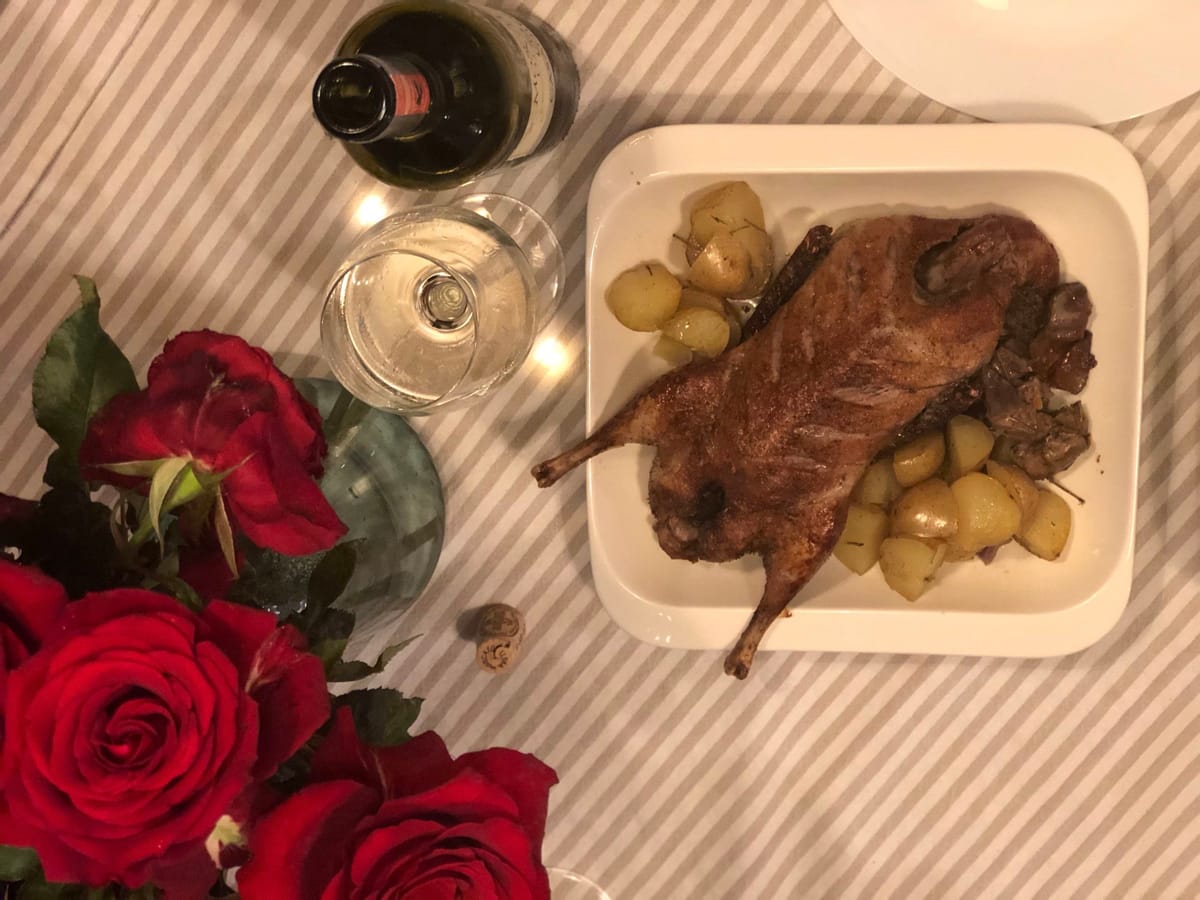
Duck has a reputation for being complicated, and I genuinely don't understand why. The technique is the same as roasting a chicken, with one meaningful difference: you flip it while it cooks so the fat renders out evenly on all sides. That's the whole secret.
The other thing worth knowing upfront is that you get two meals out of one bird. The duck itself feeds three to four people, and the fat that drips into the roasting tray while it cooks is what you use for the potatoes. Duck fat roasted potatoes are not an exaggeration. They genuinely are better.
I use a rack set over the roasting tray so the bird isn't sitting in its own fat the whole time. The fat drips down, the skin crisps up, and when you add the potatoes halfway through they're sitting in liquid gold.
Ingredients (serves 3-4)
- 1 whole duck (about 2kg), cleaned and dried well
- Salt and plenty of black pepper
- 1 carrot, roughly chopped
- 1 celery stick, roughly chopped
- 1 onion, halved
- 600g potatoes, cut into chunks
How to make it
Preheat your oven to 200°C. While it heats up, pat the duck completely dry with kitchen paper. Get inside the cavity too. The drier the skin, the crispier it gets. Season generously all over with salt and pepper, including the cavity.
Put the carrot, celery, and onion halves in the bottom of a roasting tray. Place a rack over the tray and sit the duck on it breast-side up. The vegetables flavour the fat as it drips and stop any burning at the base.
Roast at 200°C, allowing 45 minutes per kg. For a 2kg duck that's about 1 hour 30 minutes total. Every 30 to 45 minutes, take it out of the oven and flip it. So you're rotating from breast-up to breast-down and back again as you go. This is what gets the fat rendering on all sides instead of just the top.
About halfway through cooking, add the potato chunks directly into the roasting tray below the rack. They go straight into the duck fat that's collected in the tray. Turn them so they're coated, season with salt, and put it all back in the oven. Finish the duck breast-side up for the last stretch.
To check if the duck is done, pierce the thigh at its thickest point. The juices should run clear with no pink. Duck is a tougher bird than chicken, so even when it's cooked through, the meat will have more resistance. That's normal. Let it rest for at least 15 minutes before carving. Resting is not optional.
The potatoes should be crispy and cooked through by the time the duck is done. If they need more colour, pull the duck off to rest and give the tray another 10 minutes in the oven.
A few things worth knowing
On drying the duck: This is not optional advice. Moisture on the skin turns to steam in the oven, and steam does not crisp skin. Dry it once when you take it out of the packaging, and again right before it goes in.
On the fat: Duck has a lot of fat under the skin, and that's the point. As it renders out during cooking, it drips into the tray and becomes the cooking medium for the potatoes. You don't need to add any oil to the tray at all.
On resting: Duck meat is denser than chicken. Cutting into it straight from the oven means the juices run out immediately and the meat tightens up. Give it 15 minutes under loose foil and it'll be noticeably easier to carve and more moist throughout.
On the leftovers: Any duck fat left in the tray after cooking can be strained and kept in the fridge for weeks. Use it for frying eggs, roasting more potatoes, or cooking anything else that benefits from a savoury fat.