
Tuna tomato pasta with canned goods
Two cans, one pan, twenty minutes. The end-of-month pasta that actually tastes good, and the tuna oil trick that makes it.
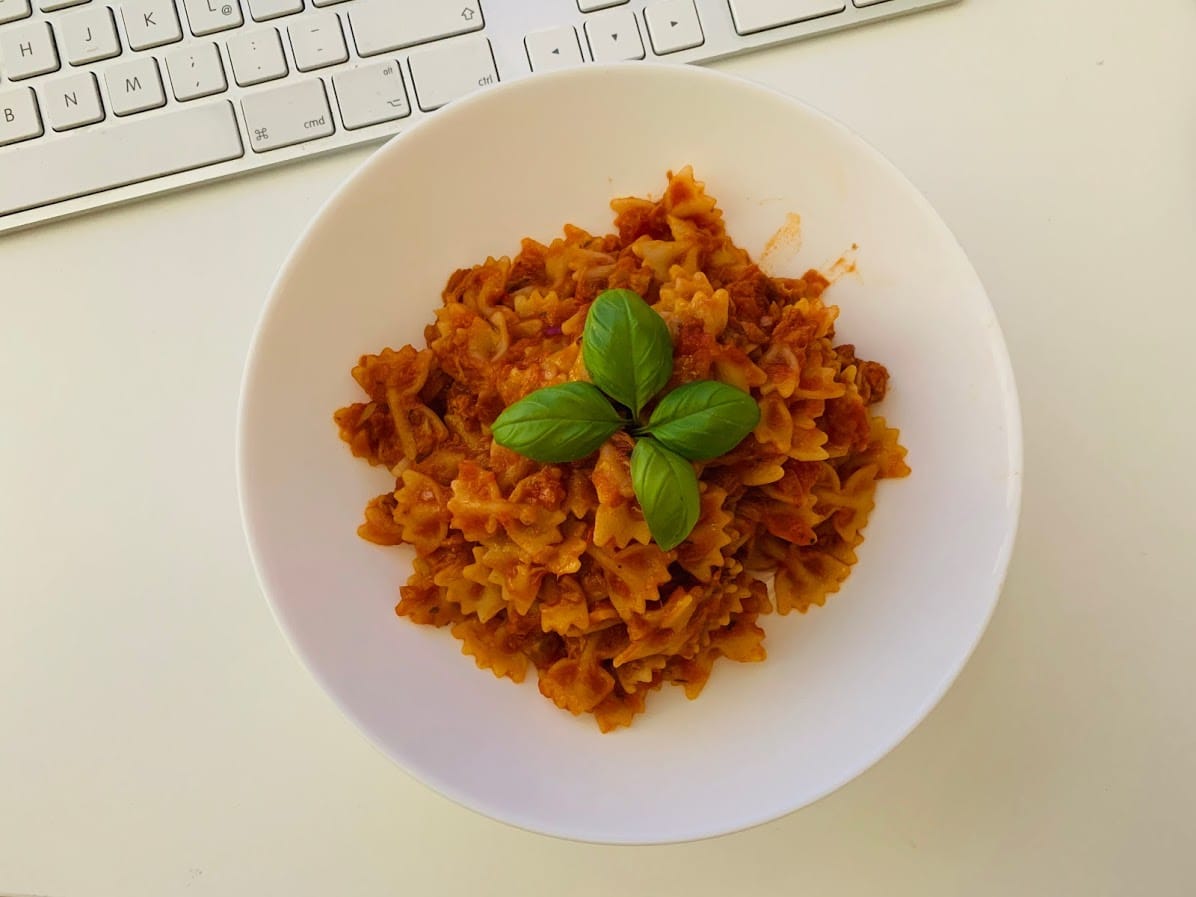
There's a specific kind of hunger that hits around the 25th of the month. The fridge is looking a bit bare, you don't want to spend money, and you still want something that actually tastes good rather than just eating bread and calling it dinner. This pasta is the answer to that situation. I've made it more times than I can count.
Two cans, one pan, twenty minutes. That's it.
It's also the canonical pantry meal, in my house at least.
Why this is actually cheap
I did the math at Rewe, which is one of the more expensive supermarkets in Germany, so consider this the ceiling:
- 2 cans of tuna: 2.38
- 1 can of crushed tomatoes: 0.89
- 500g of penne: 1.69
That's 4.96 for four portions, or about 1.24 per person. If you shop at Aldi or Penny it gets even cheaper. The tuna is the most expensive part and you can stretch one can to two people no problem.
Ingredients (serves 2)
- 250g penne or any short pasta
- 1 can of tuna in olive oil (about 160g drained)
- 200g crushed or chopped tomatoes (about half a standard can)
- 1/2 onion, finely chopped
- 1 garlic clove, minced
- Salt and pepper to taste
- Pinch of sugar (if your tomatoes taste sharp)
- Optional: a small dried chilli or a splash of milk (more on both below)
Use tuna in olive oil, not brine. The oil from the can is what you cook the onions in. It already carries all that tuna flavour and saves you from reaching for a separate bottle.
How to make it
Put a large pot of salted water on to boil.
Open the tuna can and pour the oil into a cold pan. Turn the heat to medium-high. When the oil is warm, add the chopped onion and garlic. If you're using dried chilli, crumble some in now. Cook until the onion is soft and translucent, about 5 minutes.
Add the crushed tomatoes. I usually add a small splash of water too, roughly half the volume of tomatoes, to give the sauce a bit more body to reduce from. If the tomatoes smell sharp or acidic, add a small pinch of sugar. Bring to a simmer.
Add the tuna now and break it up into the sauce with a spoon. Mix it in, lower the heat, and let it all reduce together while the pasta cooks. This is the move that most recipes get wrong: they add the tuna at the very end as an afterthought. Adding it early lets it actually become part of the sauce.
Cook the pasta according to the packet, usually 8-10 minutes. Drain, add to the pan, toss everything together.
One optional trick: if the sauce feels too tomato-forward or a bit sharp, stir in a small splash of milk right at the end. Maybe 2-3 tablespoons. It smooths the whole thing out without making it creamy. I do this about half the time depending on how the tomatoes turned out.
A few notes
On the pasta shape: Penne or rigatoni work best here because the ridges hold the chunky tuna sauce. Spaghetti works too but it's messier to eat and you lose more of the sauce at the bottom of the bowl.
On tuna brands: I've used every budget brand available in German supermarkets. The quality difference between a 0.89 can and a 1.69 can is real but not dramatic in a cooked sauce. Save the good tuna for when you're eating it straight.
On leftovers: This reheats fine the next day with a splash of water to loosen the sauce. The pasta will have absorbed most of the liquid overnight but it comes back with a bit of help.
On making it more substantial: A handful of black olives, some capers, or a few cherry tomatoes added with the canned tomatoes all work well. A fried egg on top if you're really hungry.
This is the kind of recipe I almost didn't bother writing up because it feels too obvious. But "obvious" is relative, and the tuna-oil-as-cooking-fat trick alone is worth knowing if you don't already do it.