
The simplest pan fried pork fillet
Thin fillets, a quick marinade, high heat, and a proper rest. Plus the sinew trick that stops them curling up in the pan.
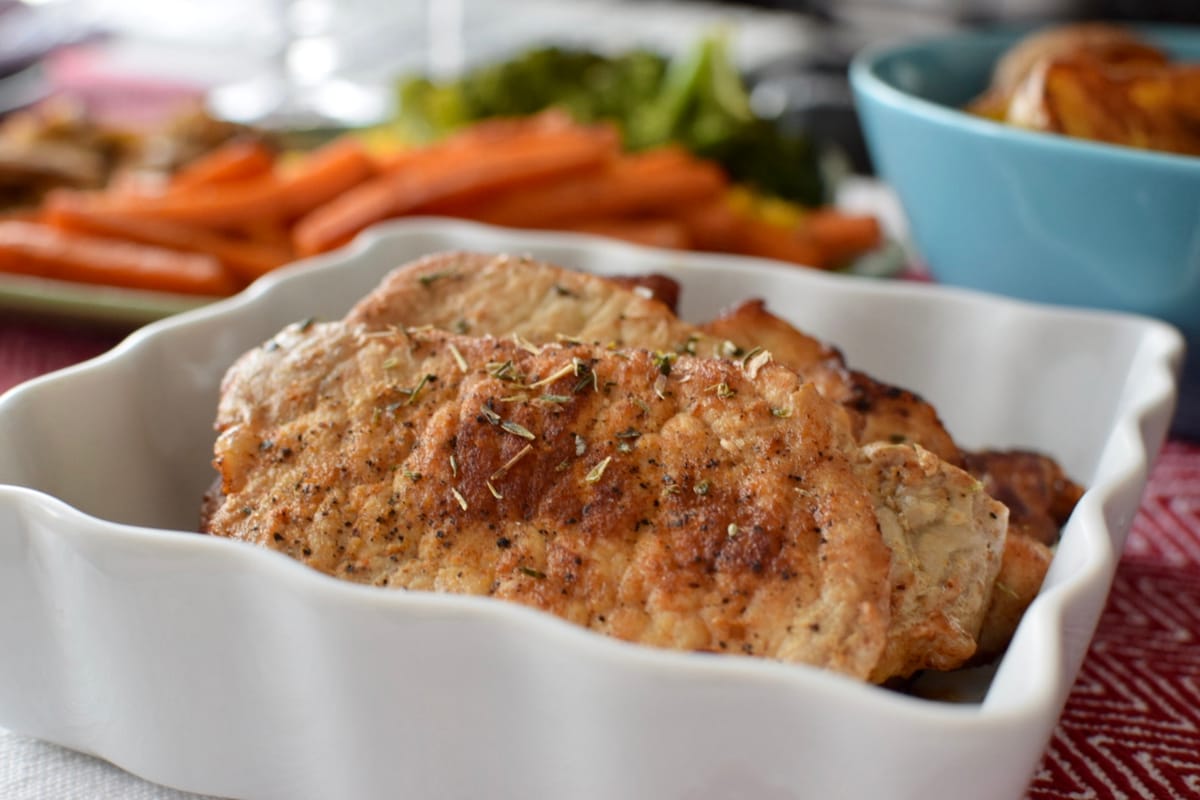
Pork fillet is cheaper than chicken most weeks and more interesting than turkey, but it has a reputation for coming out dry and curled up in the pan. Both of those are fixable with about two minutes of prep before it ever hits the heat.
This is the stripped-down version: thin fillets, a simple marinade, high heat, short cook, proper rest.
Ingredients (serves 2)
- 2 pork fillets (about 150g each), sliced to about 1cm thickness
- Salt, pepper, paprika, dried oregano, dried garlic
- Olive oil
How to make it
Before anything else, deal with the sinew. Pork fillets have a thin layer of fat and sinew running along the edge. When it heats up it contracts and curls the fillet into a bowl shape. Take a knife and make a few shallow cuts through that edge, about 1cm apart, cutting just through the fat layer. The fillet will stay flat in the pan.
Season both sides generously with salt, pepper, paprika, dried oregano, and dried garlic. Drizzle a little olive oil over the fillets and rub everything in. Then pound them lightly with a rolling pin or the flat of your hand. You're not trying to flatten them completely, just evening out any thick spots and breaking up the connective tissue so they cook evenly and stay tender.
Let them sit for 10 minutes while the pan heats up.
Get the pan to medium-high heat with a splash of olive oil. When it's hot, add the fillets without crowding the pan. Cook for 3 to 4 minutes per side. At 1cm thick they cook fast and you want to err on the side of slightly less time rather than more.
Take them off the heat and let them rest on a plate for as long as they cooked, so 3 to 4 minutes. This is the step most people skip and it makes a real difference.
Three things about pork
On the sinew cuts: This is the most important prep step and takes 30 seconds. Without it, the fillet curls up and the edges cook faster than the centre. With it, the whole thing lies flat and cooks evenly.
On the thickness: 1cm fillets cook in about 3-4 minutes per side on medium-high heat and stay juicy. Thicker pieces take longer in the centre and dry out on the outside before the middle is done. If your fillets are thicker, pound them down rather than cooking them longer.
On resting: When meat comes off the heat, the juices are all pushed to the centre by the heat. Resting gives them time to redistribute back through the fillet. Cut into it too early and all the juice runs out onto the plate. Four minutes of patience makes a noticeable difference.